Gardening Services in Edmonton

Gardening services in Edmonton should do more than tidy a lawn for a day; they should give you practical, well-judged maintenance that keeps the outside of the property in good order through the seasons. Our work focuses on the everyday tasks that help a garden look cared for and function properly, from routine mowing and hedge trimming to clearances, border tidy-ups and general landscape work. If you need a dependable way to keep outdoor spaces manageable, we can help with a service shaped around the condition of the garden and the outcome you want.
We work across the main areas of domestic garden care, with an emphasis on clean finishing, sensible scheduling and tidy waste handling. That can mean a straightforward refresh after growth has got away, or a more involved visit when several parts of the garden need attention together. Good maintenance is rarely one single task; it usually involves a sequence of small, accurate jobs carried out in the right order. If you are planning a one-off visit or recurring maintenance, you can request a quotation once you have reviewed the services that best match your property.
Our aim is to make the service easy to understand from the start: what we do, what is included, and where one type of work is more suitable than another. Some gardens need light regular upkeep, while others need a proper reset before normal maintenance can begin. In either case, the starting point is the same: clear expectations, a sensible scope and work that leaves the outdoor space neater, safer and easier to manage.
Routine garden maintenance
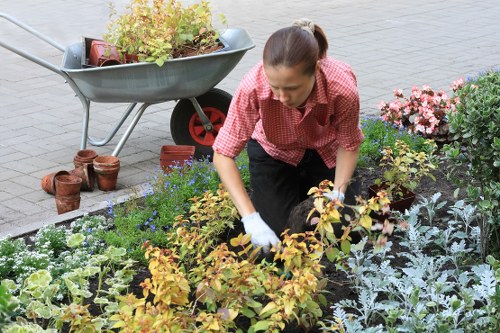
Regular garden maintenance is often the simplest way to keep a property looking orderly without allowing jobs to build up. Our maintenance work can include bed tidying, light weeding, leaf collection, edging and cutting back softer growth that starts to blur the shape of paths, lawns and borders. The work is planned around the state of the garden rather than a fixed checklist alone, because a compact city plot, a family garden and a larger rear space may all need different levels of attention.
Where ongoing care is needed, we can keep the emphasis on practical results: crisp edges, manageable growth and a cleaner overall appearance. This type of work is especially useful when you want the garden to remain presentable between larger seasonal visits or before guests, letting agents or household projects. Garden maintenance is the kind of service that works best when the detail matters as much as the overall finish, because small neglected areas can change the look of the whole space.
Routine upkeep is also the stage at which it becomes easier to spot what is changing in the garden. If one area is repeatedly overgrowing or a border is becoming difficult to keep neat, we can adjust the scope accordingly. That may mean extra attention to corners, a better cut sequence around obstacles, or a more regular approach to the parts that grow fastest. A well-kept garden is usually built on consistency, not on occasional heavy intervention.
Lawn care and mowing
Lawn mowing is often the most visible part of garden care, but it only works well when it is matched to the condition of the grass and the shape of the area. We can carry out mowing as a standalone service or as part of broader maintenance, aiming for a neat finish that suits the garden rather than an overworked look. Where edges, corners and access points need attention as well, the cut is finished with a focus on evenness and tidiness.
Grass can become patchy, dense or uneven when it is left too long between visits, and different lawn areas may need different handling. Some spaces are straightforward and open, while others have narrow side passages, borders, ornaments or sloped sections that make the work more detailed. Lawn mowing is useful when you want the practical side of the garden brought back under control with a clean and considered finish rather than a rushed pass.
Alongside mowing, we can help with the surrounding detail that changes the final appearance of the lawn area: trimming around boundaries, clearing cuttings where appropriate and tidying the transition between grass and border. If the lawn is being maintained as part of a broader schedule, consistency in timing usually matters more than dramatic intervention. Keep it simple, and the result is easier to maintain.
Hedge trimming and boundary shaping
Keeping growth controlled
Hedges and boundary shrubs need more than an occasional cut if they are to remain even, manageable and appropriately shaped. Our hedge trimming work is designed to keep growth in check without stripping away the structure that gives a garden its boundary lines. That can include light trimming to maintain an existing shape, more involved reduction where growth has outpaced the space available, and tidying that improves the look of front and back gardens alike.
Good trimming is as much about judgement as cutting. A hedge that is heavily reduced one month may need a gentler approach the next, while an established line of shrubs may benefit from regular neatening rather than occasional drastic work. Hedge trimming is especially useful where boundaries affect the overall presentation of the property, because overgrowth often makes a garden feel less defined even when the rest of it is in fair condition.
What tidy boundaries change
Once boundaries are trimmed properly, paths feel more open, light can reach the rest of the garden more evenly, and the shape of the space becomes clearer. That applies whether the hedge frames a front approach, screens a rear boundary or runs alongside a driveway or fence. We can also factor hedge work into a wider maintenance visit, so the garden is not left with one neatly cut area and another part still in need of attention. Balanced finishing matters here because one untidy edge can undermine the whole result.
Garden clearance and cut-back work
Garden clearance is the right choice when a space has moved beyond routine upkeep and needs a more decisive reset. This might involve removing accumulated green waste, cutting back overgrown growth, clearing clutter from beds or borders, and making the garden easier to use or maintain again. The task is usually more about restoring order than perfecting fine detail, although a careful finish still matters once the main material has been cleared away.
Some clearances are driven by seasonal growth, while others happen after a period without upkeep or before a new round of planting or landscaping. We can work through the space in a logical sequence, dealing with the most obstructive growth first and then refining the visible areas so the garden feels open rather than simply stripped back. Garden clearance can be a practical starting point when the job is too involved for routine maintenance alone.
In many cases, the benefit of clearance is not just appearance. It can make it easier to see what is worth keeping, what needs pruning, and where a simple follow-up visit will be enough versus where more substantial work is still required. If you have a garden that has become difficult to manage, a clearance visit can create the space needed for a more sensible long-term plan.
Landscape gardening and outdoor improvements

Landscape gardening is the part of the service that deals with changing the layout, structure or function of the garden rather than simply maintaining it. Depending on the space, this may involve reshaping beds, improving surface lines, introducing better definition around paths or preparing areas for planting and more durable use. The goal is a garden that works better day to day, not just one that looks tidy immediately after a visit.
For some customers, landscape gardening is about gradual improvement: making one area easier to access, reducing awkward corners or reworking the balance between lawn, planting and hard edges. For others, it is the start of a broader redesign that needs practical groundwork before any finishing touches are added. Landscape gardening gives you a route into more considered changes where the structure of the outside space matters as much as the planting.
When we plan this kind of work, we keep the practical sequence in mind. Surface preparation, clearance, shaping and final tidy-up each affect the next stage, so the order of work matters. A garden with better structure is usually easier to maintain afterwards, and that can make even modest changes worthwhile. The best improvements are the ones that still feel useful long after the first tidy appearance has passed.
Landscaping for usable outdoor space
Landscaping covers the more visible and physical side of garden improvement, including changes that help the outdoor area feel more coherent and easier to use. That can involve shaping sections of the garden, improving transitions between spaces, or adding a more defined finish where a patchy or improvised layout has become difficult to manage. The work is best approached in stages so that each part of the garden supports the next.
We can combine landscaping with maintenance or clearance when a property needs both structure and upkeep. For example, a space might first need overgrowth removed, then need its edges reshaped, and then need a finishing visit to bring the whole area into line. Landscaping is useful when the priority is not just to clear or cut, but to create a garden that feels organised and intentional from the ground up.
Because every outdoor space has its own limits, the best landscaping choices are often the ones that respect existing conditions while improving how the garden is used. That may mean working around established trees or beds, keeping access routes clear, or refining the way one part of the garden sits beside another. Practical design makes maintenance easier, and that is often where the long-term value lies.
Tree lopping and removal
Tree work needs care, planning and the right approach to the amount of growth involved. Our tree lopping and removal service is for situations where branches, height or the condition of a tree are creating a practical problem that needs attention. That might mean reducing intrusive growth, clearing overextended limbs or dealing with a tree that is no longer suited to its location. The exact method depends on what is safe and appropriate for the tree and the site.
Tree work can affect light, access and the overall shape of the garden, so it is often tied to a wider clearance or maintenance visit. Where a tree has become too dominant, a careful reduction may improve balance without making the area feel bare; where removal is the right solution, the work should leave the site tidy and usable afterwards. Tree lopping and removal is best treated as a focused service with clear boundaries and a sensible plan.
After the main work is complete, the surrounding area often benefits from a proper tidy-up so fallen material does not distract from the result. That can include clearing cut branches, neatening the immediate space and making sure the remaining garden reads as a coherent whole. The result should feel deliberate, not simply reduced in size.
How we approach quotations
Quotation work is clearer when the scope of the garden is described in practical terms. Helpful details include the size of the space, the type of work needed, whether access is straightforward, and whether the job is a one-off clearance, an ongoing maintenance visit or a mix of both. Photos can be useful when the garden is overgrown or has areas that are hard to describe, and they can help us judge the likely sequence of work before anything is booked.
If you are comparing options, it is also worth noting whether the garden has delicate planting, narrow access, steep sections or a mix of lawn, hedge and border work. Those features can change how a visit is planned and how long the work may take, especially when several tasks are being combined. Pricing and quotes are usually easier to discuss once the main tasks are identified, because the scope matters more than a generic description.
We keep the process straightforward: tell us what needs attention, identify any access points or restrictions, and explain whether you want a light tidy or a more substantial reset. That gives a more accurate basis for a quotation and helps avoid unnecessary back-and-forth. Clear information at the start is often the quickest route to a useful response, and it makes it easier to match the service to the garden properly.
Supported areas of service

- Routine mowing and lawn edging for neat, manageable grass areas
- Hedge trimming and boundary shaping for a cleaner outline
- Garden clearance where growth or debris has built up
- Landscape gardening and broader outdoor improvements
- Tree lopping and removal for overextended or problematic growth
These services can be used separately or combined, depending on what the garden needs most. A property that only needs a tidy lawn may not require any larger intervention, while a neglected space may benefit from clearance before maintenance begins. We aim to keep the work joined up so the result is consistent, rather than leaving one obvious part of the garden unfinished because it belongs to a different type of task.
For many customers, the value is in choosing the right mix of work once instead of making several uncoordinated visits. A hedge might need cutting, the lawn may need mowing and the borders may need a proper tidy-up all at the same time. If that sounds like your garden, you can ask for a quotation and outline the priorities in plain terms.
About Edmonton
Edmonton is a district in north London within the London Borough of Enfield, and its identity has long been shaped by its position along the River Lea corridor and the routes that connect north London with the wider Lea Valley. Historically, Edmonton was a parish in Middlesex, later becoming a metropolitan borough before local government reorganisation brought it into the present borough structure. The area contains a mix of older street patterns, post-war housing, retail corridors and open spaces, creating a layered urban character rather than a single uniform centre. One of the most recognisable local landmarks is Edmonton Green, which acts as a retail and transport focus and sits near long-established residential streets. The area is also associated with the North Middlesex Hospital, a significant local institution that reflects the district’s continuing role within the wider urban network. To the east and south-east, the River Lea and its associated channels, paths and open land connect Edmonton with the broader waterway landscape of north London, while local parks and recreation grounds provide breathing space within a densely built environment. In cultural terms, Edmonton has often been described through its mix of everyday high-street life, neighbourhood estates and historic references, including its appearance in literary and social history. The result is a place where older settlement patterns, twentieth-century change and present-day city life sit together in close proximity, giving the district a practical and varied character.
Seasonal care and finishing touches

Seasonal changes affect almost every garden, even when the core layout stays the same. Spring growth can quickly alter the shape of borders and hedges, summer can bring faster mowing cycles, and autumn often creates more clearing and collection work. A sensible maintenance plan takes those shifts into account so the garden does not swing between overgrowth and excessive cutting. The aim is steady control, not chasing problems after they have already become awkward.
Finishing touches matter because they are what make the work feel complete rather than merely carried out. That can mean taking a little extra time around edges, removing loose debris, refining the line of a hedge or making sure cut material is handled properly. A garden that has been worked on should look coherent when you step back from it, with the main surfaces, boundaries and borders reading as one tidy space.
If you want help with a garden that has become overdue for attention, or if you need a regular service to keep things manageable, the next step is simple: contact us to request a quotation. Tell us what needs attention, and we can help shape the right service around the work that matters most.